

3D printing in orthodontics uses digital scans of your teeth to design and fabricate custom appliances, like brackets, aligners, and retainers, built specifically for your smile. Traditional methods rely on physical molds and pre-made, one-size-fits-most parts. That’s the core of the 3D printing vs. traditional braces comparison, and it changes what your whole experience feels like.
At Christopher Orthodontics, We’ve ditched the cold, clinical vibe (and the messy goop trays) in favor of a fully digital workflow. Here’s what that looks like in practice.
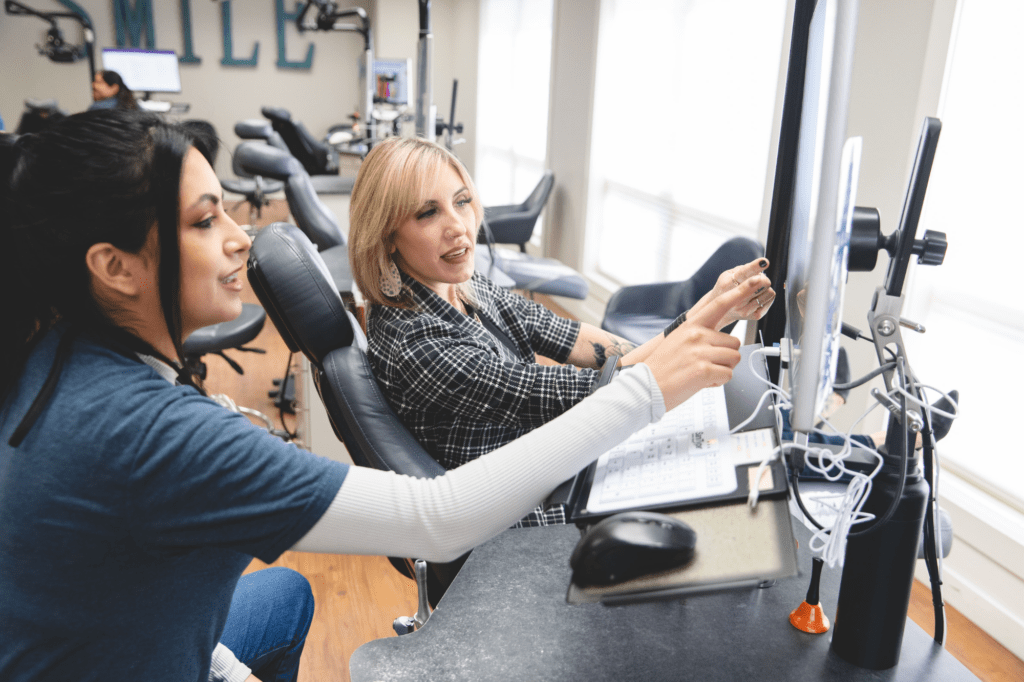
Your smile snapshot starts with an intraoral scanner. It captures thousands of images in minutes, building a precise 3D model of your teeth. That model flows into CAD software, where our doctors design your personal smile game plan tooth by tooth. From there, additive manufacturing (a fancy way of saying “3D printers”) builds the appliances layer by layer.
Common 3D-printed applications in modern orthodontics include:
- Invisalign aligners shaped to your exact tooth movements
- 3D-printed custom braces (like our LightForce brackets) contoured to each tooth
- Retainers built from your digital scan
- Study models used for planning and tracking progress
Compare that to the traditional route. In the old workflow, you’d bite into a tray full of putty, wait for it to set, and hope the impression captured everything. That mold would then be shipped off, poured into plaster, and used to bend wires or select stock brackets. Every tooth got roughly the same bracket, and the orthodontist bent the wire to compensate for the difference.
The digital approach flips that. Instead of forcing your teeth to work with generic hardware, the hardware is designed around your teeth.
Christopher Orthodontics is a LightForce Authorized Provider, which means our team offers 3D-printed custom braces engineered for each guest who sits in our chair. Dr. Aaron Christopher and Dr. Nadia Farjo lead our doctor team and use these digital tools daily to build smiles for families of every age.
The result? A cleaner start, a more accurate plan, and appliances that fit like they were made for you. Because they were.
How Do 3D Printing and Traditional Methods Work?
Both approaches share the same goal: move your teeth into a healthier, better-looking position. But how they get there is a whole different story.
How Does the Traditional Workflow Work?
Here’s how orthodontics worked for decades:
- Physical impressions. You bit into a tray of impression material and held still while it hardened.
- Plaster models. The impression was shipped to a lab and cast into plaster molds.
- Stock brackets. Your orthodontist selected pre-made brackets from a set of standard sizes.
- Manual wire bending. Wires were shaped by hand to account for differences between your teeth and the generic brackets.
- Frequent adjustments. Regular visits were needed to tweak wires and reposition brackets.
It worked. It still works. But it involved a lot of manual estimation and gooey trays.
How Does the Digital Workflow Work?
The 3D-printed process replaces guesswork with data:
- Intraoral scanning. A small handheld wand captures 3D digital impressions of your teeth in a few minutes. No goop.
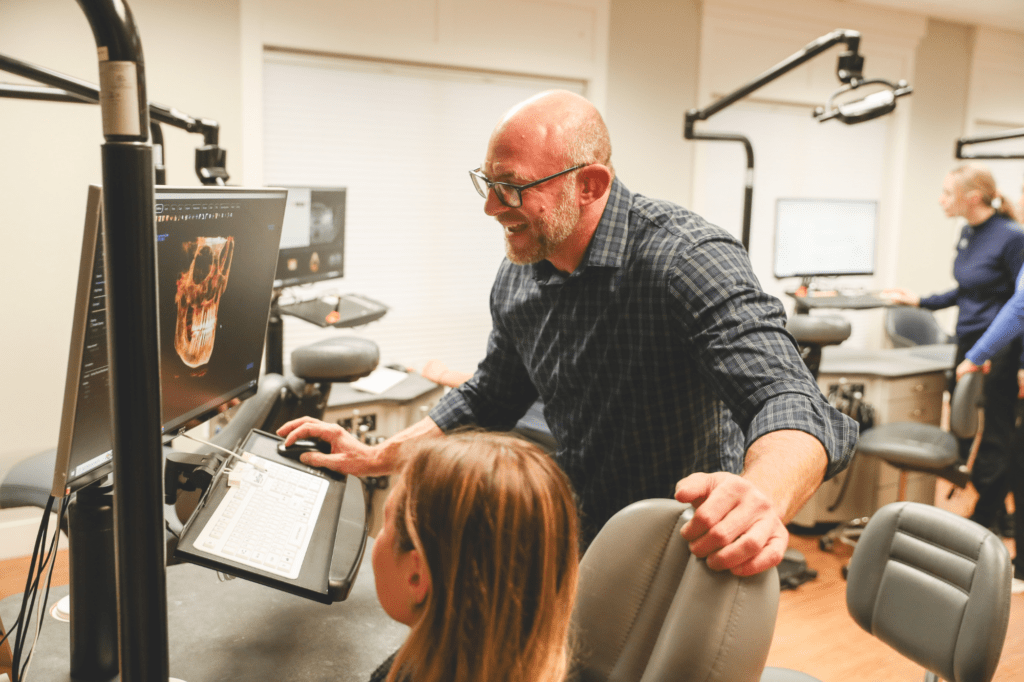
- Virtual smile game plan. Our doctors review your scan in CAD software, mapping every tooth movement from day one to the finish line.
- Custom fabrication. Your brackets, aligners, or retainers are 3D-printed to match your specific tooth anatomy.
- Precise fitting. Because the appliances are designed for your teeth, placement is faster and more accurate.
- Fewer adjustments. Custom fit means less time in the chair fine-tuning generic parts.
What Makes LightForce-Style Custom Brackets Different?
Traditional brackets come in a handful of sizes. Your teeth don’t. With 3D-printed custom braces, each bracket is designed for one specific tooth, matching its shape, angle, and position. That level of personalization means the wire does more of the work automatically, and your orthodontist spends less time bending things by hand.
Where Do Virtual Consults Fit In?
The digital workflow also opens up virtual consults. If you’re curious about smile enhancement options but can’t easily get to one of our offices, you can start with photos and a video chat. Our team can give you a general sense of what to expect before your in-person smile snapshot. It’s a low-key way to get answers on your own schedule, from the comfort of your own home, before you ever step through our doors.
Same goal, better tools. That’s the short version.
Benefits of 3D-Printed Orthodontic Technology
The switch from stock parts to custom-printed appliances brings a handful of real, day-to-day improvements for your smile enhancement experience.
Better accuracy and fit
When each bracket or aligner is designed around your exact tooth shape, everything sits where it should from day one. There’s less compensation, less repositioning, and a more predictable result.
More comfort
Custom-contoured appliances have smoother surfaces and lower profiles. Fewer sharp edges means less irritation to your cheeks and lips. Your tongue notices the difference too.
Less chair time
Because the digital plan does more of the work upfront, your visits tend to be shorter. Bracket placement is guided by a custom tray. Wires often need fewer manual bends.
Fewer adjustment visits
Traditional braces typically need frequent tweaks. With custom-designed hardware, many families come in less often for check-ins. That’s easier on school schedules, work calendars, and long drives from smaller towns.
A cleaner, faster start
3D digital impressions replace the messy trays. No gagging, no waiting for material to set, no worrying that the impression didn’t capture a back tooth.
More predictable outcomes
Digital treatment planning lets our doctors preview each stage of your smile enhancement before anything goes on your teeth. You know what to expect. So do we.
According to the American Association of Orthodontists, accurate diagnosis and careful planning are central to a successful outcome. Digital workflows support both, which is one more reason families feel confident moving forward with a custom plan.
When the tools get smarter, the whole experience gets easier for every guest in our chair.
3D Printing vs. Traditional: Side-by-Side Comparison
Both approaches straighten teeth. The differences show up in the details. Here’s how they stack up.
| Feature | Traditional Braces | 3D-Printed Custom Braces |
|---|---|---|
| Bracket design | Stock, one-size-fits-most | Custom-designed per tooth |
| Impressions | Physical putty trays | 3D digital scans |
| Chair time per visit | Longer, more manual work | Typically shorter |
| Adjustment frequency | More frequent | Often fewer visits |
| Comfort | Standard edges and contours | Smoother, custom-contoured |
| Aesthetics | Metal brackets, more visible | Lower profile, blend better |
| Treatment planning | Based on physical models | Fully digital, previewable |
| Repair process | Standard replacement parts | Reprinted from your scan |
How Do Accuracy and Fit Compare?
Stock brackets fit most teeth well enough. Custom-printed brackets fit your teeth exactly. That difference shows up in how efficiently your teeth move and how close the final result matches the original plan.
How Does Time in the Chair Differ?
Traditional braces often require longer appointments for wire adjustments and bracket repositioning. 3D-printed custom braces tend to shorten each visit because the hardware is already dialed in. Total treatment time is often shorter, though every smile is different.
Which Option Looks Better?
Metal braces don’t meddle around. They work, and they’re visible. 3D-printed custom brackets sit closer to the tooth surface, giving a lower profile that many teens and adults prefer. If discretion is a priority, Invisalign takes it further with nearly invisible aligners.
How Do Comfort and Adjustments Compare?
Smoother, patient-specific hardware means less rubbing on lips and cheeks. Fewer adjustments mean less soreness after visits too.
What About Durability and Repairs?
Both types are durable when cared for properly. If a bracket pops off, traditional replacements come from a standard inventory. Custom brackets can be reprinted from your original digital file. Retainers work the same way through our str8 retainer assurance program.
Who Benefits Most From Each Approach?
Traditional metal braces work well for:
- Guests who prefer a tried-and-true option
- Families looking for the most budget-friendly path
- Cases where a specific mechanical approach is preferred by the doctor
3D-printed custom braces work well for:
- Guests who want a lower-profile look
- Busy schedules that benefit from fewer visits
- Anyone who wants the most precise fit available
- Teens and adults balancing school, work, and life
Invisalign works well for:
- Adults and older teens who want a nearly invisible option
- Guests with mild to moderate alignment needs
- Anyone who wants removable trays for eating and cleaning
Not sure what your bite needs? Our team is happy to walk you through it whenever you’re ready.
Cost & Payment Factors for New vs. Traditional Tech
Cost in orthodontics comes down to three main things: how complex your case is, which appliance you choose, and how many visits your smile game plan requires. 3D-printed technology can carry a different upfront cost than traditional braces. Efficiency, fewer adjustment visits, and shorter treatment time often help balance that out over the length of your care.
What Drives the Cost?
- Case complexity. Simple spacing corrections cost less than full bite corrections.
- Appliance type. Traditional metal braces, 3D-printed custom braces, and Invisalign each have different price points.
- Custom fabrication. Patient-specific brackets and aligners require more design work upfront.
- Number of visits. Fewer adjustments can mean less time off work or school.
- Length of treatment. Most cases fall between 12 and 24 months.
What Payment Options Does Christopher Orthodontics Offer?
We keep things flexible for your ortho family:
- Interest-free financing. Monthly payments that fit your budget.
- Insurance benefits. We’ll help you understand what your plan covers.
- Flexible down payments. Options to match different family situations.
- str8 retainer assurance program. Transparent pricing on retainer replacements so your results stay put.
Why Does a Consult Matter?
No two smiles cost the same because no two smiles are the same. The best way to get real numbers is to sit down with our team, share your goals, and let Dr. Christopher or Dr. Farjo build a personal smile game plan around what you actually need. Every guest gets a clear picture of what their care involves.
Your smile snapshot is free. Come as you are, ask anything, and take your time deciding.
Are You a Candidate for 3D-Printed Orthodontics?
Most people are. Digital orthodontic tools work for a wide swath of alignment needs, from mild crowding to more involved bite corrections.
3D-printed options often work well for:
- Crowding, where teeth overlap or twist
- Spacing gaps between teeth
- Overbites, underbites, and crossbites
- Open bites where teeth don’t meet properly
- Adult retreatment after previous orthodontics
All ages welcome. Kids, teens, and adults all leave our offices with wonderful new smiles. The American Association of Orthodontists recommends a first orthodontic evaluation by age seven. That doesn’t mean treatment starts then, just that a smile snapshot gives our doctors a chance to watch how everything is developing.
When traditional metal braces might still be the right call. Some complex bite corrections respond well to traditional mechanics. Budget considerations matter too. If interest-free financing on traditional braces fits your family better than a different appliance, our team will say so.
What our doctors evaluate:
- Alignment and spacing
- Bite relationship between upper and lower teeth
- Jaw growth and development (for younger guests)
- Overall dental health
- Your goals for how you want to live life smiling
How Do You Get Started?
Two easy ways in:
- Free in-office consult. Come see us, meet the team, and get your smile snapshot.
- Virtual consult. Share photos from home and chat with our team online.
Dr. Nadia Farjo and Dr. Aaron Christopher will review your case personally. Our doctors also complete continuing education well beyond the required minimum each year, so the tools we use stay current and the care you receive keeps pace with what’s new in the field.
Whenever you’re ready, our offices welcome you as a guest and treat you like family. There’s no pressure and no rush, just a friendly team ready to help you understand your options and build a plan that works for your life. You walk in as a guest and leave feeling like family.
Frequently Asked Questions
Are 3D-printed braces better than traditional braces?
3D-printed custom braces offer a more precise fit because each bracket is designed for one specific tooth, while traditional braces use stock brackets in standard sizes. That often means shorter visits and fewer adjustments. Traditional braces are still highly effective and remain a great option, especially for families looking for a more budget-friendly path.
Do 3D-printed aligners work faster than metal braces?
In many cases, yes, though it depends on your specific alignment needs. Custom-designed appliances tend to move teeth more efficiently because the treatment plan is mapped digitally from start to finish. Complex bite corrections can still take similar time regardless of the tool. Our doctors will give you a realistic timeline when you come in.
Does 3D printing in orthodontics cost more?
The upfront cost for 3D-printed custom braces or Invisalign can differ from traditional metal braces, but the difference varies by case. Fewer adjustment visits and shorter treatment time in many cases help balance the numbers. Christopher Orthodontics offers interest-free financing to make any option workable for your family.
How accurate are 3D-printed orthodontic appliances?
Very accurate. The digital workflow uses 3D digital impressions from an intraoral scanner and CAD software to design each appliance around your exact tooth anatomy. That level of precision is difficult to match with physical molds and stock parts. According to the American Association of Orthodontists, accurate diagnosis and planning are key factors in successful outcomes.
Can I switch from traditional braces to digital treatment?
In many cases, yes. If you’re partway through treatment and considering a change, our doctors can review your current progress and let you know whether switching to Invisalign or 3D-printed custom braces makes sense. It depends on how far along you are and what your goals are. A quick chat with our team is the fastest way to find out, and we’re glad to help you weigh what fits your smile best.