
How Digital Scanning & Planning Improves Your Clear Aligner Results
Getting straight teeth used to mean biting into a tray of goopy putty and holding still while it hardened. Not anymore. Digital scanning has completely changed how clear aligners are designed, delivered, and tracked, and the results speak for themselves. You get a sharper fit, fewer surprises, and a smoother experience from your first visit to your final tray.
Every Invisalign smile game plan at Christopher Orthodontics begins with digital scanning. Here’s how it works, why it matters, and what it means for your results.
What Is Digital Scanning in Clear Aligner Treatment?
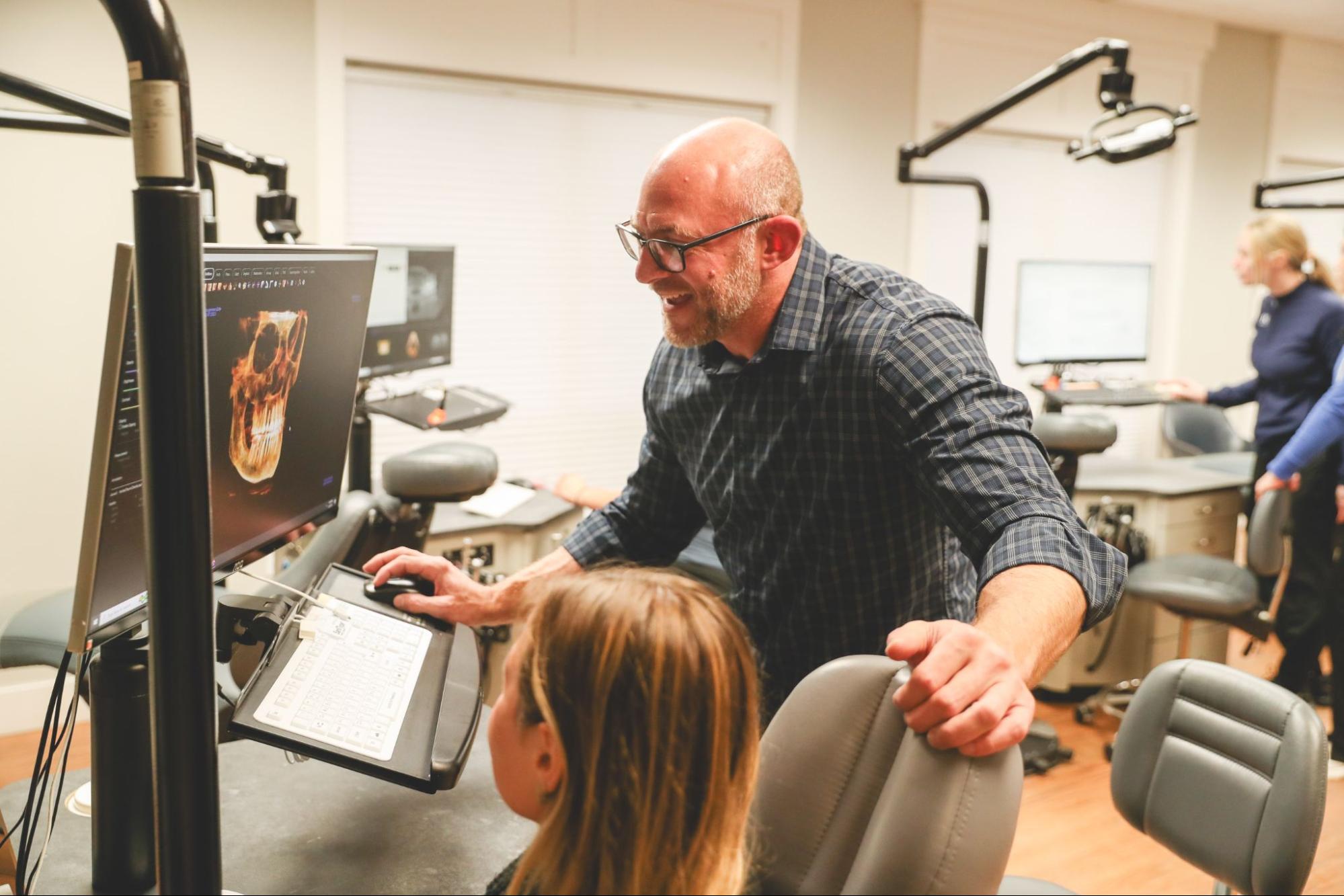
Digital scanning uses a small handheld wand that captures thousands of optical images of your teeth per second. Special software stitches those images together into a highly accurate 3D model of your teeth, gums, and bite, all viewable on a monitor within minutes.
This model replaces the messy putty trays used in older-style 3D digital impressions. No gooey material. No gag reflex. Just a quick pass of the wand around your mouth.
That 3D file becomes the foundation for designing your custom clear aligners, including Invisalign. Every curve, edge, and contact point is mapped in fine detail so your aligners fit precisely and move teeth predictably.
Digital scanning kicks off every Invisalign planning process here. Before Dr. Christopher or Dr. Farjo maps out a single tooth movement, we capture your smile in full 3D so your personal smile game plan is built on real data, not guesswork.
The Digital Scanning & Planning Workflow: Step-by-Step
From your smile snapshot to your first set of trays, here’s how the workflow flows for every family we welcome:
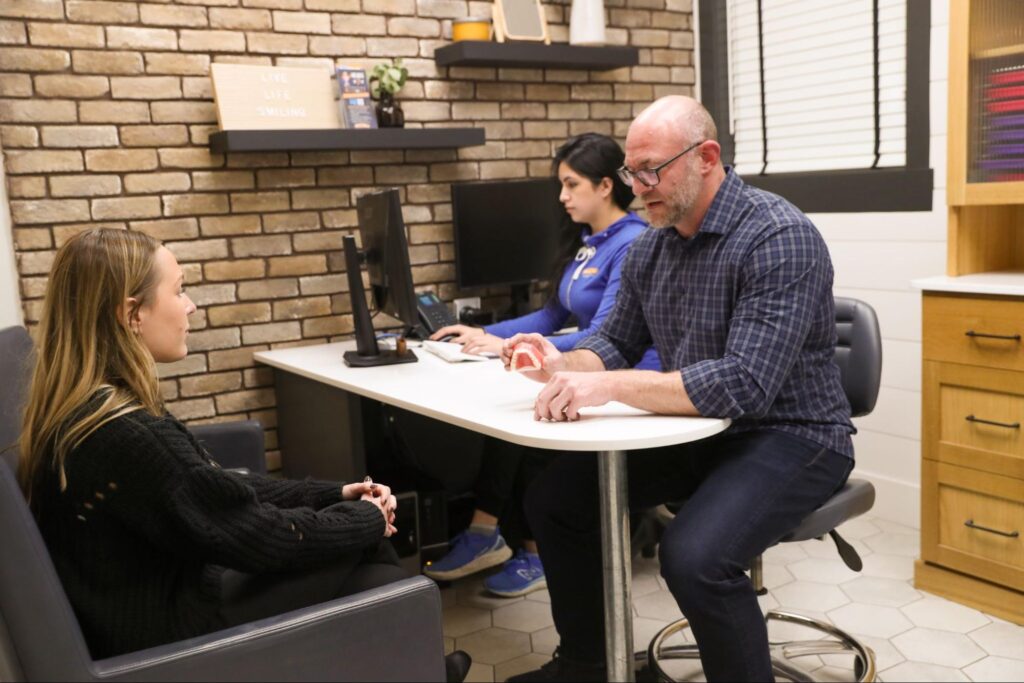
- Consultation and exam. During your free consult, Dr. Christopher or Dr. Farjo reviews your smile goals, examines your teeth and bite, and confirms whether clear aligners are the right fit.
- Intraoral 3D scan. A team member glides the scanner wand around your mouth. A full-arch digital model is captured in under 5 minutes. You can watch your smile appear on the screen in real time.
- Digital treatment planning. Advanced software (like ClinCheck for Invisalign) simulates every tooth movement, stage by stage, from your current smile to your final result.
- Doctor review and refinement. Dr. Christopher and Dr. Farjo don’t rubber-stamp the software. They study each stage, fine-tune tooth positions, adjust force patterns, and shape a plan that matches your unique anatomy.
- Custom aligners are made. Your finalized digital file is transmitted straight to the lab, where your aligners are 3D-printed or thermoformed to exacting specs.
- Mid-treatment rescans. As you progress, quick rescans confirm your teeth are tracking on plan and help guide any refinements along the way.
Every step is built on the same precise digital foundation, which keeps your smile enhancement moving forward smoothly and predictably.
Benefits of Digital Scanning & Planning for Aligner Results
The technology is impressive, but what really matters is how it changes your experience and your outcome. Here’s what digital scanning brings to your smile enhancement with Christopher Orthodontics.
- Micron-level accuracy. Optical scanning captures fine detail that putty simply can’t, and better-fitting aligners mean more predictable tooth movement and results that closely match the plan.
- No more messy putty trays. Say goodbye to gag reflex triggers and jaw fatigue. The scanner wand is small, smooth, and moves at your pace.
- See your smile before you start. Digital planning software lets you preview a 3D simulation of your final smile at your smile snapshot, so you’ll know what you’re working toward before your first aligner goes in.
- Fewer refinements down the road. Because your smile game plan is built with precise force calculations from day one, there’s less need for course corrections mid-treatment, which keeps your total time in aligners on track.
- Faster turnaround. Your digital file transmits instantly to the aligner lab. No shipping physical molds. No days lost in the mail. Your aligners get into production sooner.
- Easy replacements and progress tracking. Your digital records stay on file, so if a tray gets lost, a replacement can be ordered without redoing anything. Side-by-side comparisons show how far your smile has come.
Dr. Christopher and Dr. Farjo, both top 1% Invisalign providers nationwide, use these tools every day at Christopher Orthodontics to deliver smiles that fit right, feel right, and finish on schedule.
Digital Scanning vs. Traditional Putty Impressions
Wondering how the two really compare? Here’s a side-by-side look:
| Factor | Digital Scanning | Traditional Putty Impressions |
|---|---|---|
| Comfort | Smooth handheld wand, no gag reflex | Bulky trays filled with chilled putty that often trigger gagging |
| Accuracy | Optical precision down to microns | Risk of material shrinkage, distortion, or air bubbles |
| Speed | Full-arch scan in minutes, transmitted instantly | Days to ship molds to the lab |
| Visualization | Interactive 3D model you can zoom and rotate | Static plaster models |
| Revisions | Rescan a single area in seconds | Redo the entire impression from scratch |
| Record Keeping | Stored digitally for easy access and comparison | Physical models take up shelf space and can break |
For most families, the difference is easy to feel from the first visit. The scan is quick. There’s no bad taste. And you get to see your teeth in 3D on the spot.
Who Is a Good Candidate for Digitally Planned Clear Aligners?
Clear aligners work well for a lot of smiles, but not every smile. Here’s a quick look at who tends to be a strong fit:
- Mild to moderate crowding, spacing, or bite concerns. Aligners handle these cases beautifully.
- Teens and adults ready to commit to daily wear. Aligners need to stay in 20 to 22 hours a day to work as planned.
- Smiles with existing dental work. Crowns, veneers, and most restorations are usually compatible with aligner treatment.
- Not ideal for severe skeletal bite concerns or complex extraction cases. These often call for braces or a combined approach.
Here’s what makes it easy: a quick 3D digital scan gives Dr. Christopher and Dr. Farjo everything they need to tell you whether Invisalign, metal braces, or 3D-printed custom braces is the best route for your smile.

Frequently Asked Questions
What is the 30-minute rule for Invisalign?
The 30-minute rule means keeping your aligners out for no longer than 30 minutes per meal. Aligners should stay in your mouth 20 to 22 hours a day, so eating quickly, brushing, and getting them back in matters. Following this rule keeps your teeth moving on schedule and helps you avoid setbacks or extra trays.
What disqualifies you from clear aligners?
A few things can make clear aligners less than ideal for your smile: severe skeletal bite concerns, active gum disease, or a lifestyle where wearing trays 20+ hours a day isn’t realistic. Complex cases involving multiple tooth extractions may also call for braces instead. A digital scan and exam at your free consult will show quickly whether aligners fit your smile and your daily routine.
Does digital scanning hurt or use radiation?
No. Digital scanning uses safe visible light, not radiation. The wand is small, smooth, and doesn’t cause any discomfort. Most guests are surprised at how quick and easy it feels compared to old-style putty impressions.
How long does the scan take?
A full-arch digital scan takes under 5 minutes. Your team member simply guides the wand around your teeth while the 3D model builds on the screen in real time. You can even watch your smile take shape as it scans.
Can I see my results before starting treatment?
Yes. One of the best perks of digital planning is the 3D simulation. Before your first aligner goes in, you can see a preview of your projected final smile, which is a great way to feel confident in your smile game plan before treatment even begins.
Ready to See Your Smile in 3D?
Digital scanning is just one of the ways Christopher Orthodontics makes clear aligner treatment more precise, more comfortable, and more predictable. When you pair Harvard-trained, top 1% Invisalign providers with advanced 3D digital impressions, you get a smile game plan built to actually deliver on the results you want.
Curious what your smile could look like? Book a free consult at any of our locations across Washington and Oregon, including Walla Walla, La Grande, Yakima, Ellensburg, and Moses Lake. We’ll capture your smile snapshot, walk you through your 3D preview, and help you decide if clear aligners are the right next step for you and your family.