

Choosing between braces and Invisalign can feel like a big decision, especially when you’re weighing options for the whole family. At Christopher Orthodontics, we help parents, teens, and adults find the right fit every day. Here’s what you need to know about both so you can walk into your free consult with confidence and a head full of good questions.
Braces vs. Invisalign: A Quick Overview
Braces vs. Invisalign comes down to this: braces are fixed metal or clear brackets bonded to your teeth and connected by wires that gently guide them into place. Invisalign uses a series of removable, nearly invisible aligner trays worn 20–22 hours a day. Both effectively correct crowding, spacing, and bite concerns for kids, teens, and adults, and both have decades of science behind them.
At Christopher Orthodontics, our doctors offer both options, including advanced 3D-printed custom braces made just for you. Dr. Christopher and Dr. Farjo are experienced Invisalign providers, so your family gets expert guidance no matter which path you pick. Our team invests in continuing education year after year, which means the recommendations you hear reflect the latest thinking in the field.
The right choice depends on your lifestyle, your bite, your age, and how much flexibility you want during treatment. Some families even mix approaches, with one child in braces and another in Invisalign. That’s the beauty of working with a practice that offers both under one roof, with one team guiding the whole family forward.
How Each Treatment Works
Both options move teeth using steady, gentle pressure. They just go about it differently.
How braces work: Small brackets are bonded to the front of each tooth, then connected by a thin archwire. The wire applies continuous pressure, shifting teeth into their new positions 24/7. You’ll visit us every 6–8 weeks so our team can adjust the wire and track progress. Because braces work around the clock, they don’t rely on you remembering to wear them. That makes them a low-maintenance workhorse for busy families.
How 3D-printed custom braces work: This is where things get exciting. Dr. Christopher and Dr. Farjo use 3D scans to design brackets built specifically for your teeth. Each bracket is placed in the perfect spot, which can streamline movement and reduce guesswork. It’s modern precision meets a proven approach, and it represents a real leap forward in how braces are planned and placed.
How Invisalign works: You wear a series of custom-made clear trays, swapping to the next set every 1–2 weeks. Each tray nudges your teeth a little closer to the finish line. You’ll pop in for check-ins every 6–10 weeks so our doctors can confirm things are tracking as planned and hand off your next round of trays.
The big difference? Invisalign only works when you wear it. That means 20–22 hours a day, taking the trays out only for meals and brushing. For motivated teens and adults, this flexibility is a huge plus. For younger kids or anyone who’d forget, braces often win on simplicity and consistent results.
Most families find the visit cadence easy to fit around school, sports, and work schedules, which keeps treatment moving without disrupting daily life.
Benefits of Braces vs. Benefits of Invisalign
Both treatments deliver beautiful smiles. The right one depends on what matters most to your family.
What are the benefits of braces?
- Handle complex bite corrections and tough tooth movements with ease
- No compliance needed; they work automatically 24/7
- Durable and tough, great for active kids who are always on the go
- Ideal for younger children and teens who might misplace removable trays
- 3D-printed custom braces from Christopher Orthodontics add a personalized precision edge
- Available in metal or clear bracket styles to match your preference
What are the benefits of Invisalign?
- Nearly invisible, so most people won’t notice you’re straightening your smile
- Removable for eating, so no food restrictions to worry about
- Easier brushing and flossing since the trays come out
- Comfortable for athletes who wear mouthguards and musicians who play wind instruments
- Fewer in-office visits for emergency repairs
- Invisalign Teen includes compliance indicators and replacement aligners if one goes missing
Both options are backed by our STR8 Retainer Assurance Program after treatment wraps up. This program keeps your new smile locked in with retainer replacements, so you’re never left scrambling if one gets lost or worn out. It’s one of the ways we stay connected with your family long after the last bracket comes off or the final tray is worn.
Our doctors will walk you through the pros and cons based on your specific bite, age, and daily routine. There’s no one-size-fits-all answer, and we like it that way. Every mouth is different, and every family schedule is different too.
Side-by-Side Comparison Table
Here’s a quick way to see how braces and Invisalign stack up against each other:
| Feature | Metal/Clear Braces | Invisalign |
|---|---|---|
| Appearance | Visible metal or tooth-colored clear brackets | Nearly invisible clear trays |
| Comfort | Some tenderness after adjustments; brackets can rub | Smooth plastic; mild pressure with each new tray |
| Treatment Time | Often comparable to Invisalign; case-dependent | Often comparable to braces; case-dependent |
| Maintenance | Brush and floss carefully around brackets and wires | Remove trays, clean daily, brush teeth normally |
| Food Restrictions | Avoid hard, sticky, crunchy foods | None; remove trays to eat anything |
| Compliance | Automatic, works 24/7 | Requires 20–22 hours of daily wear |
| Appointments | Every 6–8 weeks | Every 6–10 weeks |
| Best For | Complex bites, younger kids, active athletes needing durability | Mild to moderate cases, motivated teens and adults, discreet treatment |
Treatment time depends on your specific case, so your consultation will give you the most accurate picture. Both options can deliver stunning results when matched to the right person at the right time.
Insurance and Financing
Most insurance plans with orthodontic benefits apply equally to braces and Invisalign. Apple Health and Medicaid may cover qualifying minors, and we’re happy to help verify your coverage before you commit to anything. We also offer flexible financing options built to work with family budgets.
The best way to get clear answers for your family? Book a consultation. Your visit includes a full evaluation and clear answers about insurance and payment options. Zero pressure. Just honest information you can take home and think about.
Can’t make it into the office? Our Virtual Consult lets you start the conversation from home, which is especially helpful for families with packed weekday schedules or longer drives.
Which Option Fits Each Family Member?
Every family member brings different needs to the table. Here’s how we usually think about the best fit:
- Young kids (ages 7–11): Braces are often preferred at this stage, especially for Phase 1 interceptive care. Little ones don’t always remember to put trays back in, and braces take that worry off the table.
- Teens: Either option can work beautifully. If your teen is responsible, organized, and motivated, Invisalign Teen is a fantastic fit. If they’re more go-with-the-flow or play rough-and-tumble sports, braces might be the easier choice.
- Adults: Invisalign is a favorite for professionals who want to straighten their smile discreetly at work. Clear braces are also a solid option if you’d rather not manage trays.
- Athletes: Invisalign is removable for mouthguards, which many athletes appreciate. Braces work fine with sports too; they just need a protective mouthguard designed for them.
- Musicians: Wind and brass players often find Invisalign easier to adjust to than braces, though plenty of musicians thrive with braces as well.
- Complex bites: For significant bite corrections, rotations, or jaw alignment needs, Dr. Christopher and Dr. Farjo may recommend braces or a combined approach. Our 3D-printed custom braces are especially well-suited for intricate cases.
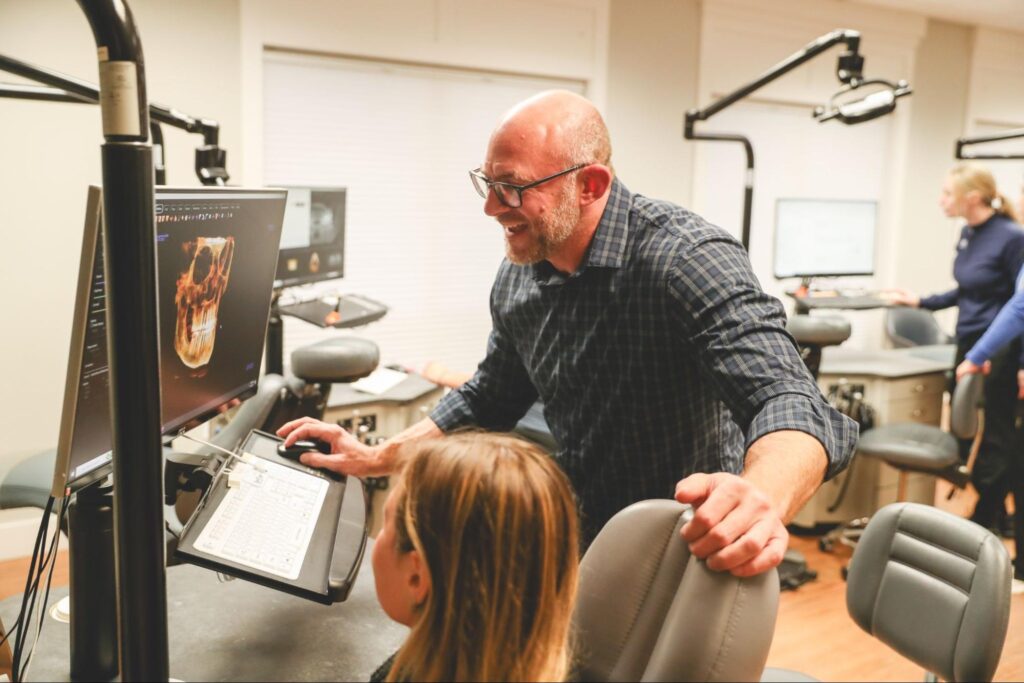
The only way to know for sure is a professional evaluation. Our doctors use state-of-the-art 3D X-rays and digital scanning to map out exactly what your family member needs, then build a personalized treatment plan around it. That plan becomes your roadmap for the months ahead.

Frequently Asked Questions
Which is faster for most cases?
Treatment times are usually similar for braces and Invisalign, often falling in the 12–24 month range depending on your bite. Simple cases can finish faster, while complex corrections may take longer. Your orthodontist will give you a realistic timeline after your consultation, based on what your teeth actually need.
Does insurance cover both options?
Yes, most dental insurance plans with orthodontic benefits apply equally to braces and Invisalign. Apple Health and Medicaid may also cover qualifying minors. Our team is happy to verify your benefits and explain what’s covered before you commit to treatment, so there are no surprises down the road.
Will Invisalign work for my teen who plays sports?
Absolutely. Invisalign Teen is popular with athletes because trays come out for mouthguards and contact sports. The aligners also include compliance indicators so parents can track wear time, plus replacement aligners if one gets lost on the field or at practice. That built-in safety net takes a lot of stress off busy sports parents.
How often are appointments?
For braces, you’ll visit every 6–8 weeks for adjustments. For Invisalign, check-ins happen every 6–10 weeks to confirm progress and pick up the next set of trays. Both schedules are designed to fit around school, work, and busy family life, and our team does its best to accommodate your calendar.
What happens if my child loses an aligner?
Don’t worry; it happens. Invisalign Teen includes replacement aligners built into the program. For adult Invisalign, we’ll walk you through the quickest path to a replacement, which may include wearing your previous tray temporarily. Give our office a call and we’ll sort it out quickly so your treatment stays on track.
Can I switch from braces to Invisalign (or vice versa) mid-treatment?
In some cases, yes. If your lifestyle changes or a specific tooth movement would be better handled by the other approach, our doctors can discuss switching. It’s not always ideal, but flexibility is one of the perks of working with a practice that offers both. We’ll always explain the trade-offs so you can make an informed choice, and we’ll make sure the path forward still lines up with your treatment plan.